Door closer cam
What Makes the Door Pull Itself Shut?
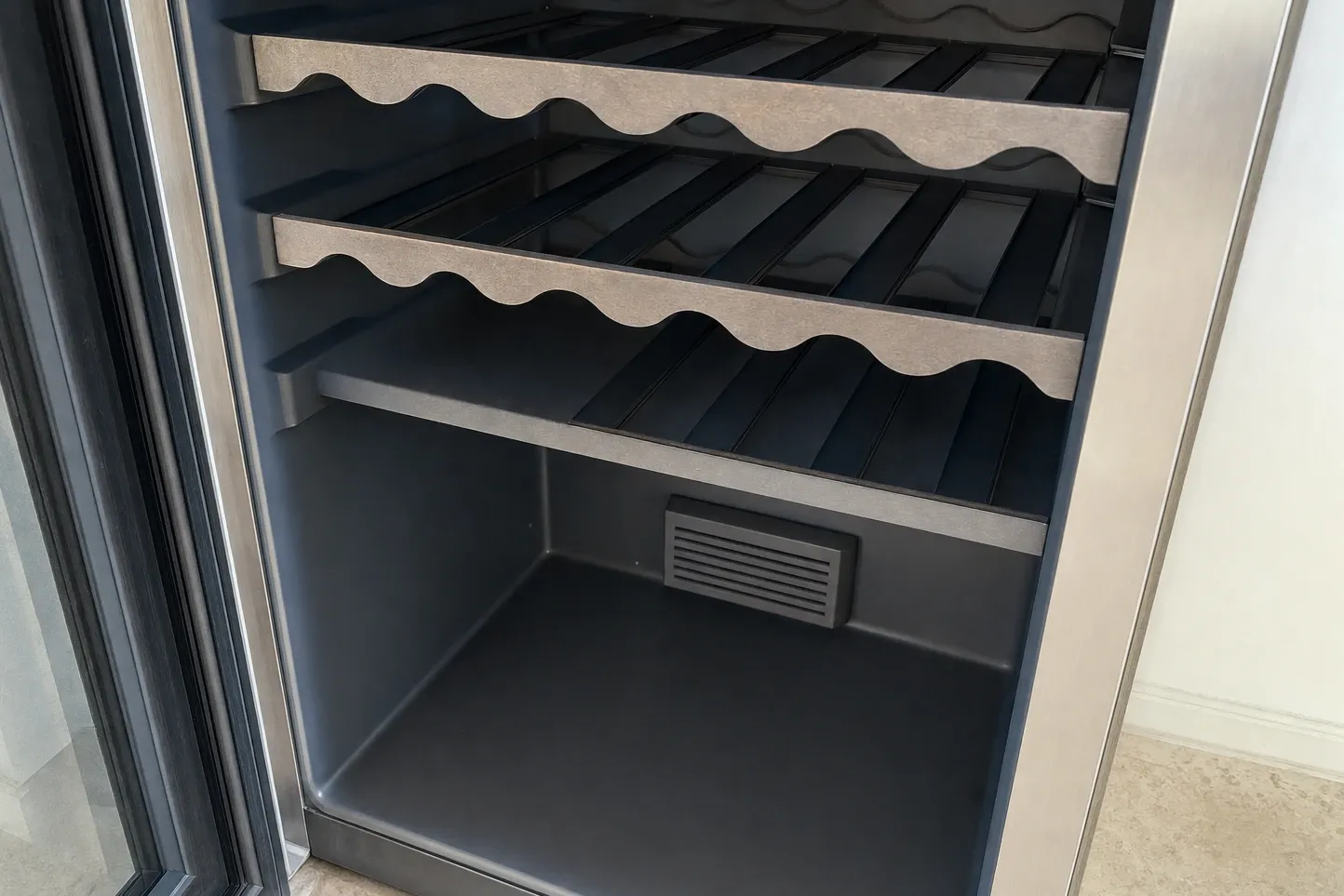
Where it sits
Inside the hinge, not beside it. There is no spring on the door and no arm running across to the cabinet; the closing action is machined into the faces the pivot turns on. Swing a door slowly and watch its lower edge against the plinth — on most built-ins it rises a shade as the door opens and comes back down as it shuts. That rise is the whole mechanism. The weight of the door does the work and the shaped face only decides when.
How it fails
Three ways, and just one of them is this part.
The common one is load. A heavier front alters the balance the shape was cut for, so a door that used to fall shut from a few inches open now stops halfway and sits there.
The second is the seal. A moulding that has gone hard pushes back harder than the closing action can answer, and the door rebounds off the frame and eases open again.
The third is genuine wear in those faces, which reads as a door that shuts unevenly — willing one day, lazy the next — and sometimes as a soft knock at the point where it drops the last fraction.
What replacing it involves
Establishing which of the three it is, because two of them are somewhere else entirely. A visit swings the door by hand, listens for where it hesitates, reads the gap for a drop and tests the seal with a strip of paper before anything is ordered.
If the closing faces really are at fault, the hinge assembly they are part of is what gets changed — they are not a separate item to be lifted out on their own — and the door is reset square afterwards. Where the true answer is the weight of the joinery on the front, no part will cure it, and the report says so plainly.
What it costs
Door closer cam Quoted after the diagnosis
No repair band on this list covers this work, so no figure is printed for it. The visit measures it and you get one firm number before anything is opened up.
The visit itself is $89 flat, and it comes off the bill when you approve the repair — Sub-Zero Repair Service Los Angeles, (310) 499-2240.