Why Is There Moisture Around the Door Frame?
Written by
Elena Sandoval
Refrigeration technician — cabinet, door and seal work · 24 years in the trade
Checks seal geometry and door closure first on a warm-cabinet call. A unit fighting a poor seal all day makes the sealed system read badly, and the readings only mean anything once the door is closing the way it was built to.
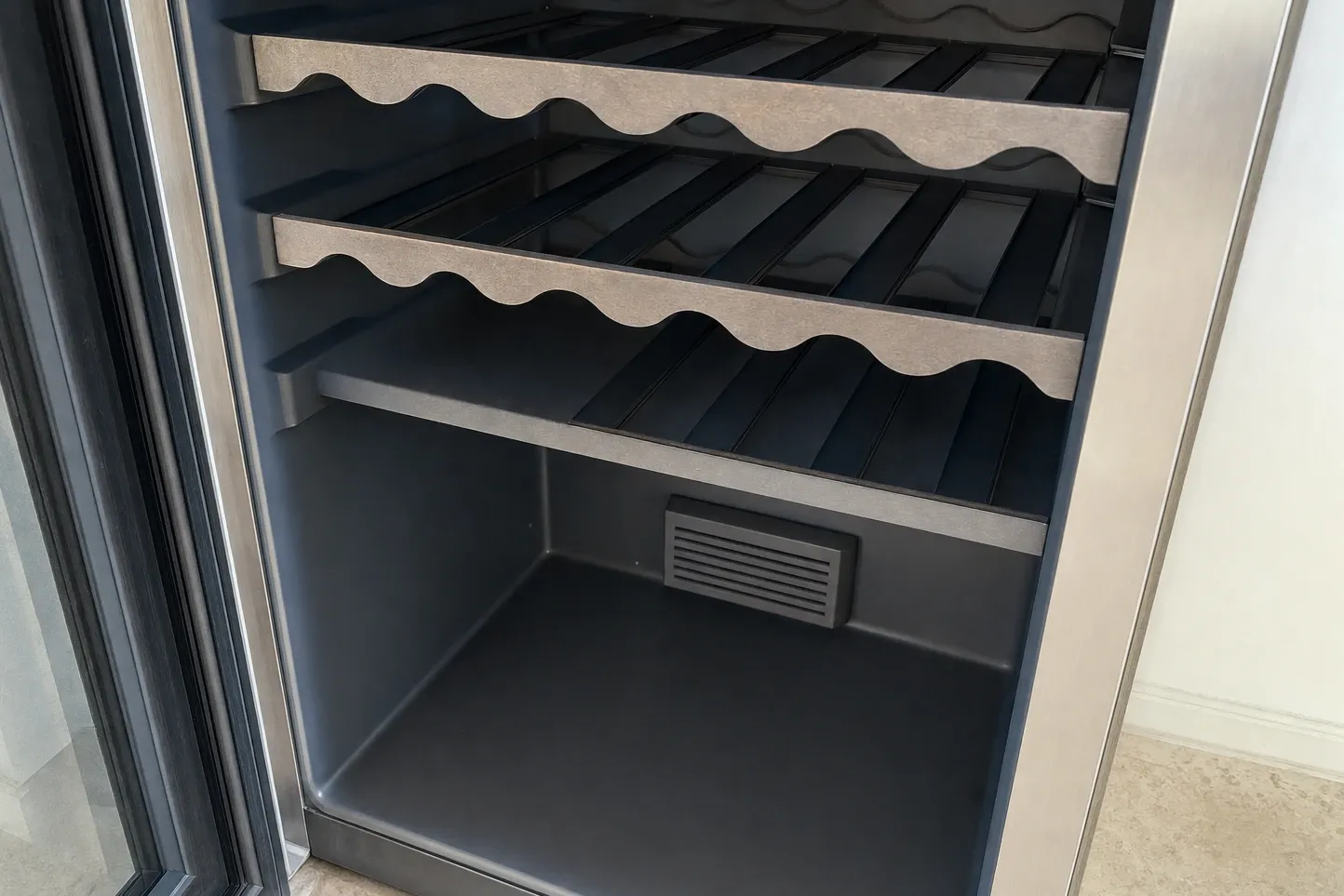
Two different complaints hide inside the phrase “my Sub-Zero is sweating”, and they have very little to do with one another. Water pooling inside the cabinet, on a shelf or in the base, is a drainage and defrost matter. Water sitting on the metal round the opening, or on the fixed post between two doors, while everything inside is properly cold, is something else entirely: the room settling onto a cold surface. This page is about the second one.
Dew point, without the physics lesson
Air carries water you cannot see, and the warmer it is the more of it it can carry. Cool that same air and there comes a point at which it can hold no more; below that point the water has to go somewhere, and it goes onto the nearest cold thing it touches. That is the glass of iced tea sweating on a warm afternoon. A refrigerator frame is a cold thing in a warm room, permanently, so the only question is whether it is being kept just warm enough to stay dry.
Cause one: the seal has stopped closing the gap
Cold air leaking steadily out of a cabinet chills the metal it flows across, and metal running colder than the design intended sits below dew point on days it would otherwise have survived. The tell is the shape of the damp. A seal fault puts moisture in one place — a line down one side, a patch at one corner, a wet spot opposite the handle — because that is where the leak is. Run a receipt round the door at several points and note where it slides out without resistance. If your loose points and your wet points are in the same place, you have your answer without anybody visiting.
Cause two: the surface that is supposed to stay warm
Built-in refrigeration is designed knowing all of this, and on cabinets that have one, a low-heat element behind the frame — or behind the fixed post dividing two doors — holds that metal a shade above the dew point of an ordinary kitchen. Where such an element is fitted and it has stopped, the symptom looks exactly like this: damp following the line of the metal rather than clustering at a leak, arriving on humid days and drying on clear ones. Not every cabinet is built that way, and nobody can tell you from a description whether yours is, so it is one of the first things established on a visit rather than something to guess at from the kitchen floor.
Cause three: the room is simply wetter than it was
A kitchen is the wettest room in a house by some distance. A dishwasher venting at the end of its cycle, a pan on the boil, a door propped open while the shopping goes in, a morning when the marine layer has sat over the city since dawn — each raises the water in the air long enough to condense on any cold surface in reach. Valley kitchens reach the same result by another route: a room that stays hot for months holds far more water even at modest humidity, which is why a cabinet in Tarzana can sweat through August while its twin in Windsor Square stays dry.
What to check, and when it stops being cosmetic
Nothing here needs a tool, and all of it shortens a visit.
- Test the door with paper at four points and note where it slides out freely.
- Look at the shape of the damp: a line that follows the metal, or a patch at one spot.
- Quieten the kitchen for an hour — no dishwasher, no kettle, nothing on the hob — then look again.
- Wipe the frame dry and time how long it takes to come back.
Treat it as cosmetic while it stays on metal and wipes away. Stop treating it as cosmetic once water is tracking down onto the joinery underneath, once a cabinet edge has swollen, once a dark line has appeared along a veneer seam, or once anything is growing in the reveal. Timber does not recover from that, and the repair moves out of the appliance and into the kitchen. Ring Sub-Zero Repair Service Los Angeles on (310) 499-2240 with the shape of the damp and the weather it likes, and the cause is usually settled in the first few minutes.
Follow-ups
- Does damp on the frame mean the refrigerator is losing its charge?
- No. A cabinet short of refrigerant struggles to hold temperature, and temperature is precisely what is not wrong here, because the food is cold. Condensation on the frame is a story about surface warmth and room humidity, which is why it arrives and leaves with the weather rather than worsening steadily.
- Can I wipe it up and carry on?
- For a week or two, yes, and on one muggy morning that may be all it ever needs. What changes the answer is where the water goes on the days nobody wipes it: onto a timber edge, into a veneer seam, down behind the plinth. Damp joinery never dries back to new.
- Why does it only happen on some days?
- Because two of the three causes are weather. The cold surface stays much the same all year, while the water held in the kitchen air rises with a warm afternoon, a long run of cooking or a morning of coastal cloud. A borderline cabinet sweats on those days and looks immaculate on the rest.